

This article is based on reporting by Andy Greenberg, senior writer at WIRED, published January 27, 2026.
On a quiet June evening in New York, while rainbows lingered over Brooklyn rooftops and children splashed in a kiddie pool, a message arrived from 8,000 miles away. It came without a subject line, from a Proton Mail address that revealed nothing about the sender. He was writing from what was described simply as hell.
The man asked to be called Red Bull. He said he was a computer engineer trapped inside a large-scale crypto romance scam operation in the Golden Triangle region of Laos. He claimed he was being forced to work under contract. And he said he had evidence, internal documents, workflows, proof of how the scams were run, step by step. He was still inside the compound. He could not reveal himself. But he wanted the operation exposed.
Andy Greenberg, who has spent more than a decade reporting on cryptocurrency crime, immediately understood the stakes. Crypto “pig butchering” scams, in which victims are lured with the promises of romance that drain them of their life savings have become the most lucrative form of cybercrime in the world. Tens of billions of dollars flow through these networks every year. Behind them are sprawling compounds across Myanmar, Cambodia, and Laos, staffed by hundreds of thousands of trafficked workers coerced into scamming strangers across the globe.
What made this message different was not the crime itself, but the source. Survivors had spoken before. Escapees had told their stories after the fact. But Greenberg had never encountered someone still inside a scam compound, offering to leak evidence in real time.
That same night, the conversation moved to Signal. Documents began arriving almost immediately; the flowcharts, written guides, and internal instructions describing the daily mechanics of the scam operation inside a compound in northern Laos. They laid out everything from fake social media profiles and hired models to AI-assisted messaging and fake crypto platforms. Even the office rituals were documented, including a gong struck to celebrate major financial wins.

A Chinese Ceremonial Drum. Courtesy of Red Bull
Then came the call.
Red Bull was young, soft-spoken, and calling under extraordinary risk. He explained that he had been recruited with a fake job offer, flown to Bangkok, sent onward to the Laos border, and stripped of his passport upon arrival. He lived in a dormitory with other trafficked workers, laboured up to 15 hours a day on a night schedule aligned with the time zones of victims abroad, and survived on cafeteria meals he said tasted of chemicals.
His salary existed on paper, but in reality it was eaten away by constant penalties, leaving him perpetually indebted to the people holding him there.Escape, completion of his contract, or payment of a sum he could never afford were his only exits.
Around him, he said, people were beaten, shocked, and disappeared. He believed that discovery would mean death. Still, he was determined to talk. “Whether I stay alive or not,” he told Greenberg, “I will stop this scam.”
Over the days that followed, Red Bull became a steady source. He shared internal chats, spreadsheets tracking scam revenue, scripts used to manipulate victims, and videos covertly recorded during Signal calls. The material painted a chillingly bureaucratic picture; quotas, euphemisms, fines, incentives, celebrations for six-figure thefts, and mockery of victims’ desperation. Workers were required to post daily schedules not of their own lives, but of the wealthy women they were pretending to be.
The compound functioned less like a prison camp than a warped sales floor one held together by fear, exhaustion, and the slow erosion of hope.
As the reporting deepened, the risks to Red Bull increased. Surveillance inside the compound tightened, and the threats grew more explicit. He was told that beatings or electric shocks could be used to “improve” his performance. Cameras were installed above his desk. As the danger to his source became impossible to ignore, Greenberg was forced to pause the reporting entirely to protect him.
Red Bull attempted to escape but his forged document scheme failed, he was beaten, drugged, starved, held for ransom, and threatened with death. Messages arrived filled with fear, hunger, and desperation. At times, even Greenberg questioned whether he himself was being manipulated. The doubt lingered but the evidence, the videos, the scars, and the risk all pointed in one direction. It was real.
Days turned into weeks. Rumours of police raids swept the compound. Workers were moved. Offices dismantled. In the chaos, Red Bull found an opening. He secretly accessed internal
WhatsApp accounts, recording months of conversations and operational logs of nearly ten gigabytes of data documenting the daily life of the scam operation from the inside. Then, unexpectedly, his captors let him go.
With borrowed money, a returned passport, and nothing but flip-flops on his feet, Red Bull was driven to the edge of the Golden Triangle and abandoned. After a journey across buses, trains, and planes, he made it back to India. Only then did Greenberg meet him in person.
Red Bull, whose real name is Mohammad Muzahir, was thin, exhausted, and alive. He admitted to having scammed two people under coercion. His hands, he said, were not clean. But his actions as a whistleblower, carried out under extraordinary danger and without reward, left little doubt about his intent.

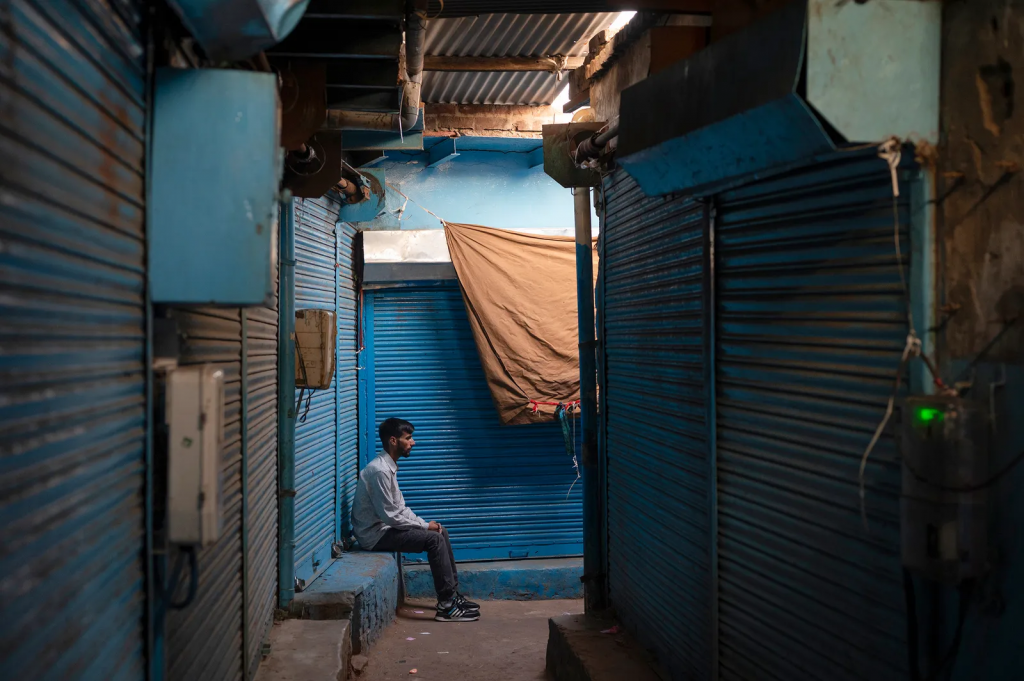
Mohammad Muzahir. Photo Credit: Saumya Khandelwal
In the end, no government rescued him. No organisation paid his way out. WIRED did not save him. He saved himself and carried out with him one of the most detailed internal records of a scam compound ever leaked.
For Greenberg, and for the wider public, the material offers something rare, not just testimony, but documentation. A detailed view of how modern cybercrime and human trafficking operate hand in hand, corruption, and distance.
Red Bull survived but most do not.