

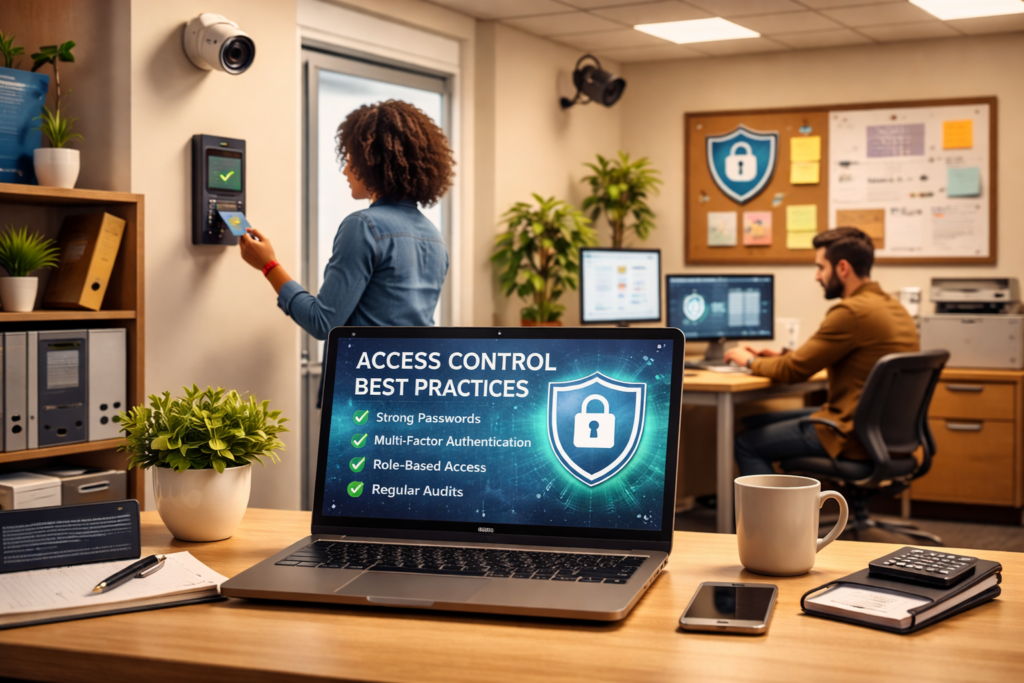
Access control is the backbone of operational security. For small and mid-size businesses (SMBs), where resources are often stretched and employees frequently perform multiple roles, managing who has access to what can be both difficult and critical. Without clear boundaries, organisations risk exposing sensitive data, encountering compliance issues, and eroding client trust.
A well-structured access control framework ensures that only the right people have the appropriate level of access at the right time. Let’s explore why access control matters, the challenges SMBs face, and the strategies that help build a secure yet cost-effective system.
Why Access Control Matters for SMBs
Access control is the first line of defence against cyber threats. It prevents unauthorised users from entering critical systems, reducing the likelihood of breaches, insider misuse, and operational disruption. For SMBs, the stakes are even higher: limited IT staff and overlapping responsibilities make it easier for permissions to spiral out of control.
One common issue is privilege creep, where employees gradually accumulate unnecessary permissions over time. This often occurs when roles change or when offboarding is poorly managed. Left unchecked, privilege creep creates hidden vulnerabilities that attackers can exploit. Regular audits and access reviews are essential to closing these gaps.
With remote and hybrid work now standard, employees frequently connect from multiple devices and locations. Centralised access management ensures these connections remain secure, enabling flexibility without sacrificing protection.
Key Challenges SMBs Face
Implementing access control is not without obstacles. SMBs often struggle with:
- Limited IT resources: Many rely on manual processes, which are prone to errors and delays. As organisations grow, these inefficiencies multiply.
- Budget constraints: Advanced enterprise-grade tools can be expensive, pushing SMBs towards less secure alternatives.
- Knowledge gaps: Employees may not fully understand the risks of weak access practices, resulting in poor password hygiene or outdated credentials.
Addressing these challenges requires solutions that balance affordability with effectiveness. Educating staff, streamlining processes, and adopting scalable tools can make a substantial difference.
Long-Term Benefits of Strong Access Control
Investing in access control delivers several lasting advantages which include:
- Customer trust: Demonstrating a clear commitment to data protection reassures clients and strengthens relationships.
- Operational efficiency: Employees can focus on their work without disruption from unauthorised access or security incidents.
- Regulatory compliance: Alignment with industry standards reduces the risk of penalties and reputational harm.
For SMBs, these benefits translate directly into both security and sustainable growth.
Best Practices for Access Control
Define Role-Based Permissions
Assign access based on job responsibilities. This minimises privilege creep and simplifies management. Roles should be reviewed regularly to ensure they reflect current operational needs.
Enforce Multi-Factor Authentication (MFA)
MFA adds a crucial layer of protection against password-related breaches. Affordable solutions are widely available and integrate easily with existing systems, such as tools provided by Microsoft.
Conduct Routine Access Audits
Regular reviews help identify outdated or excessive permissions. Pair audits with automated alerts to detect suspicious activity early.
In conclusion, for small and mid-size businesses, access control is not optional. By defining clear roles, enforcing MFA, conducting regular audits, and leveraging automation, organisations can secure their operations while remaining efficient and cost-conscious.
The right approach transforms access control from a burden into a strategic asset, protecting data, strengthening trust, and enabling long-term growth.