
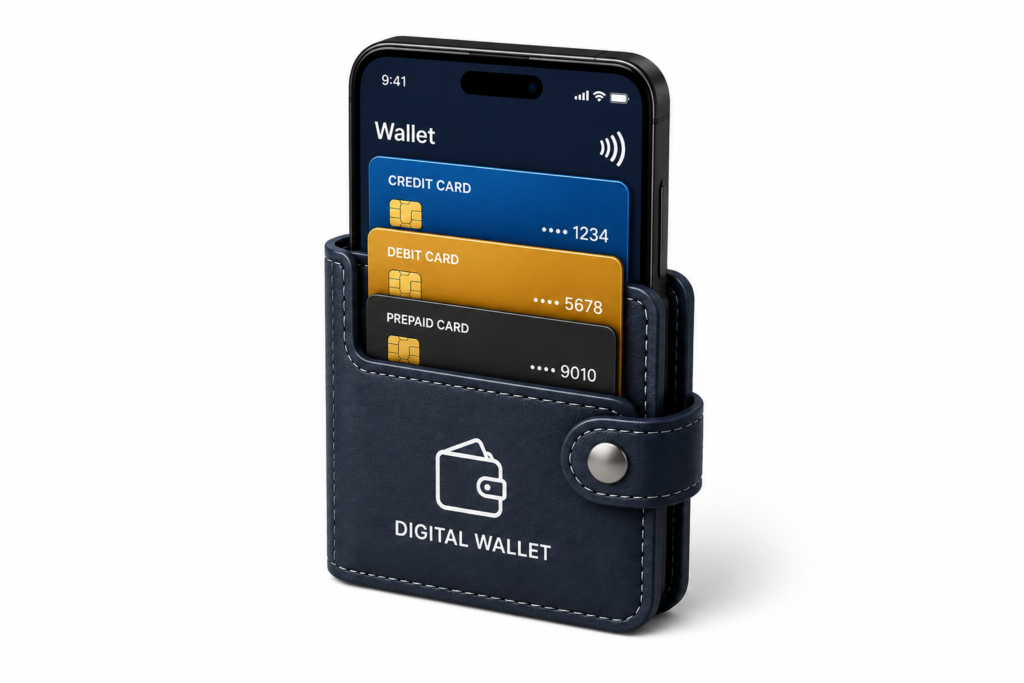
You probably use your smartphone for far more than calls and messages these days. It pays for your morning coffee, stores your bank cards, keeps track of your streaming subscriptions, and gives you access to everything from music and films to cloud storage and food delivery services.
It’s convenient. Instead of carrying cash, credit cards, and loyalty cards everywhere you go, you simply unlock your phone and tap it against a payment terminal. In seconds, the transaction is complete.
The same goes for subscriptions. A few taps are all it takes to sign up for a new streaming platform, language-learning app, gaming service, or productivity tool. Before long, most of us have accumulated several recurring subscriptions without giving them much thought.
But convenience has a downside. The more information we store on our devices and online accounts, the more attractive they become to cybercriminals.
Whether it’s a digital wallet containing payment information or a subscription account linked to your bank card, attackers see both as valuable targets. The good news is that protecting them doesn’t require advanced technical knowledge. A few sensible habits can go a long way toward keeping your money and personal information safe.
Why Cybercriminals are Interested In Your Accounts
Many people assume hackers only care about bank accounts. In reality, subscription services and digital wallets can be just as valuable.
Think about the amount of information tied to a typical account. There is usually your name, email address, phone number, payment details, billing information, and often details about family members as well. Family subscriptions can contain information about several people at once, making them particularly attractive targets.
Once criminals gain access, they may try to sell the account, harvest personal information, commit fraud, or use the data in future phishing attacks. In some cases, they don’t even need to steal money directly. Simply gaining access to a legitimate subscription account can be profitable enough.
This is one reason subscription-related scams have become increasingly common. The more services people use, the larger the attack surface becomes.
Start With the Device in Your Hand
When it comes to protecting a digital wallet, security begins with the smartphone itself. If your phone is lost or stolen, the first thing standing between a criminal and your financial information is the lock screen. That’s why every smartphone should be protected with a strong passcode, biometric authentication, or ideally both.
A simple code that can be guessed in seconds offers very little protection. On the other hand, a strong password combined with fingerprint or facial recognition makes it significantly harder for anyone else to gain access.
It may seem obvious, but many people still leave their devices poorly protected while storing payment cards, banking apps, and authentication codes on the same phone. If you wouldn’t leave your physical wallet lying open on a table, your digital wallet deserves the same level of protection.
Losing Your Phone Doesn’t Have to Mean Losing Your Data
Most people worry about the cost of replacing a lost smartphone. The bigger concern should be the information stored on it. Modern security applications can help you locate a missing device, lock it remotely, or erase sensitive information before someone else gets access. Those features can make the difference between a minor inconvenience and a serious security incident.
This becomes especially important when your phone contains payment information, saved passwords, authentication codes, and access to subscription services. The faster you can secure a lost device, the less opportunity criminals have to exploit it.
Public Wi-Fi Can Create Unexpected Risks
Imagine you’re sitting in an airport, hotel lobby, or café and decide to check your bank account or make a purchase while connected to public Wi-Fi. It feels harmless enough. After all, everyone else is using the same network.
The problem is that public networks aren’t always as secure as they appear. Attackers sometimes monitor traffic on unsecured networks or create fake hotspots designed to trick people into connecting.
While most modern payment and subscription services use encryption, relying on public Wi-Fi for sensitive activities still introduces unnecessary risk. Using a trusted VPN adds an extra layer of protection by encrypting your internet traffic, making it much harder for anyone to intercept your information.
The Subscription-Sharing Problem Nobody Thinks About
Sharing subscriptions has become normal. Families do it. Friends do it. Sometimes complete strangers do it.
What could possibly go wrong?
Quite a lot, actually. One of the biggest security mistakes people make is sharing a single account and password with multiple users. Every additional person who knows the credentials becomes another potential point of failure.
Maybe someone stores the password in an unsecured note. Maybe their laptop is infected with malware. Maybe they fall for a phishing attack. Regardless of how it happens, once the password is exposed, everyone using that account is affected.
Even when a service allows family sharing through separate profiles, there is still a degree of shared risk. A compromise involving one member can sometimes expose information about the wider group.
The safest approach is to share subscriptions only through the mechanisms provided by the service itself and only with people you genuinely trust.
Strong Passwords Still Matter
Cybersecurity advice about passwords isn’t particularly exciting, but there’s a reason experts keep repeating it. Many people continue to reuse the same password across multiple accounts. It feels convenient right up until one of those services experiences a data breach.
At that point, attackers often try the stolen credentials on other websites and apps. If the same password has been reused elsewhere, one compromised account can quickly become several compromised accounts.
Password managers solve this problem by generating unique passwords for every service and storing them securely. Instead of remembering dozens of different credentials, you only need to remember one.
They also offer another benefit that often goes unnoticed: protection against phishing. A password manager knows which website a password belongs to. If you’re tricked into visiting a convincing fake site, it generally won’t offer to fill in your credentials. That’s a useful warning sign in itself.
Don’t Stop at Passwords
Even strong passwords can be stolen. That’s why two-factor authentication has become such an important security measure. By requiring a second form of verification after entering a password, it prevents many account takeover attempts from succeeding.
If a service supports two-factor authentication, it’s usually worth enabling. And if passkeys are available, they’re worth considering too. They are increasingly being adopted across major platforms because they eliminate many of the weaknesses associated with traditional passwords.
Convenience and Security Can Co-exist
Digital wallets and subscription services aren’t going away. If anything, they’re becoming more deeply integrated into everyday life. That’s not a problem in itself. The real challenge is making sure convenience doesn’t come at the expense of security.
Lock your phone. Protect your accounts with strong authentication. Be careful on public Wi-Fi. Think twice before sharing credentials. And pay attention to what appears on your bank statement.
No technology is completely immune to cybercrime, but a few smart habits can make you a much harder target.